Politics
Meet the Press – October 11, 2026
Abdul El-Sayed (D-Mich.), Sen. Thom Tillis (R-N.C.), Michael Lewis, Tom Costello, Stephen Hayes, Jeh Johnson and Amna Nawaz
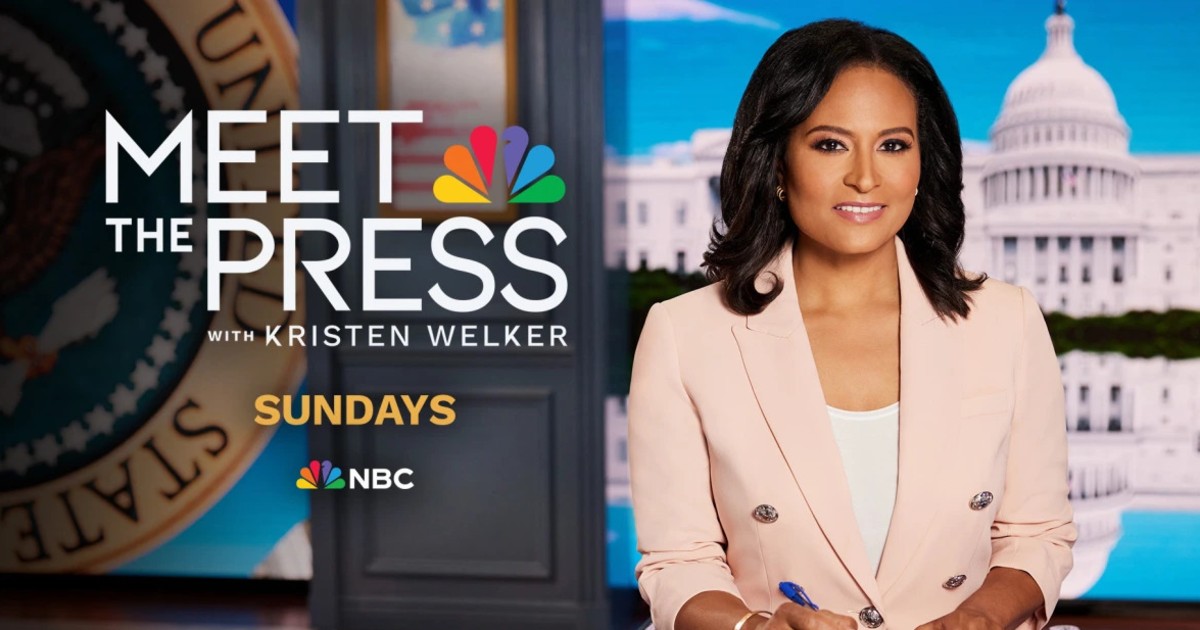
KRISTEN WELKER: This Sunday: Russian roulette. President Trump strikes a fuel deal with Vladimir Putin — easing sanctions on Russia as the war in Ukraine rages on.
PRESIDENT DONALD TRUMP:I think it’s time for Ukraine to get a new president.
KRISTEN WELKER:Is the president rewarding Putin? Plus: battleground. With just 23 days until the midterms, my exclusive interview with Michigan Democrat Abdul El-Sayed.
KRISTEN WELKER:
Do you still see President Obama’s presidency as a failure?
KRISTEN WELKER:Putting his progressive politics to the test in a state that could determine control of the Senate.
KRISTEN WELKER:
Are you concerned that if your race is close, the validity will be called into question?
DR. ABDUL EL-SAYED:
I am concerned that Donald Trump and Mike Rogers are not committed to the institution of our democracy.
KRISTEN WELKER:
And: power check. Republican Sen. Thom Tillis warns his party of an “electoral bloodbath” and sounds the alarm about presidential power. What he says Republicans need to do now. Plus: deep cuts. Bestselling author Michael Lewis on his new book, “Blockers” and the federal workers who found themselves in the crosshairs of DOGE and Elon Musk. Joining me for insight and analysis are: Amna Nawaz, co-anchor of PBS NewsHour, former Homeland Security Secretary Jeh Johnson, and Stephen Hayes, editor of “The Dispatch.” Welcome to Sunday: It’s Meet the Press.
ANNOUNCER:
From NBC News in Washington, the longest-running show in television history, this is Meet the Press with Kristen Welker.
KRISTEN WELKER:
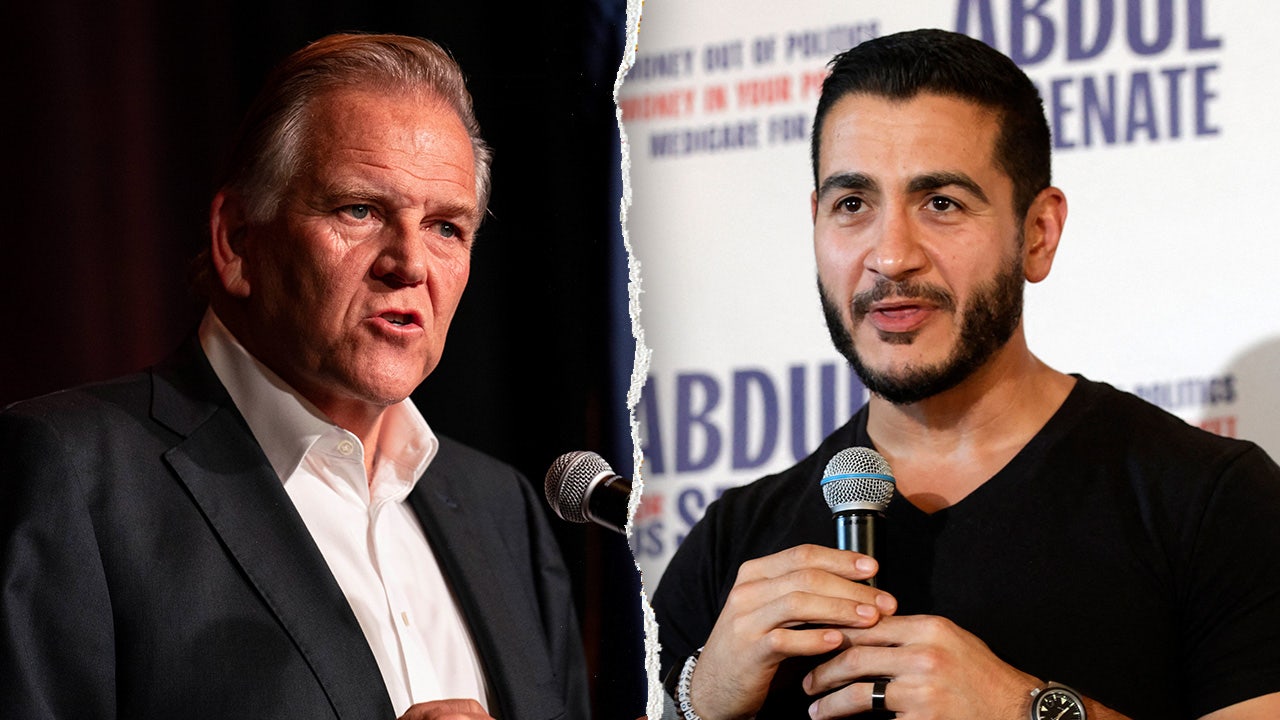
Good Sunday morning. With just 23 days until the midterms, the fight for control of Congress is intensifying, and the map is moving. The Cook Political Report shifting 18 House races toward Democrats, as Republicans fight to hold their majority. And the battle for the Senate is shifting, too. Cook moving three Senate races toward Democrats, including Kansas — now a toss-up, and projecting Democrats could pick up as many as six seats. They need four to take control. But one of the biggest battlegrounds remains Michigan, where Democrat Abdul-El Sayed is locked in a tight race with Republican Mike Rogers that could help decide control of the Senate. On Friday, I traveled to Mount Pleasant, Michigan, and the campus of Central Michigan University, in a county President Trump won in 2024, to sit down with El-Sayed.
[BEGIN TAPE]
KRISTEN WELKER:
Let’s talk about another president. You announced that former President Obama is going to join you on the campaign trail a little bit later on this month in Detroit. You have been critical, though, of President Obama. After voting for his re-election in 2012, you wrote, quote, “Obama was not the right choice. He just wasn’t the wrong one. This leader has perpetrated war, violated our civil liberties, deported more people from our shores than any other president before him, and the list of his failures goes on.” Do you still see President Obama’s presidency as a failure?
DR. ABDUL EL-SAYED:
Well, we’ve lived through two Trump terms now, so, look. I know that President Obama was handed a really difficult set of circumstances, and he did his best. I also want to step back. You know, Kristen are — are your parents still — still with us?
KRISTEN WELKER:
They are, thank goodness.
DR. ABDUL EL-SAYED:
Thank goodness. Mine are too, and I think about my dad. I wouldn’t have my life but for my dad’s efforts. So grateful for him. At the same time, there’s a lot of things about my dad I would do differently, right? And it’s because when you intensely appreciate somebody who’s done so much to make something that you’re doing possible, you’re both going to see the best of them and you’re also going to see the things that you want to change. I can’t say how much I appreciate President Obama. I’ve read everything he’s written twice. And it’s because he was the president of my 20s. I mean, it was the first time I ever saw myself in politics. I remember when he gave that 2004 commencement speech — excuse me, DNC speech. And I had never seen politics look like that. He showed me something of myself I would never have seen without him. I mean, his run, the elegance, the grace, the commitment under pressure, the — just the basket of terrible things he was handed by the Bush era, whether it was a failing economy, wars, a healthcare system that was deeply broken, and the way that he handled it all. Now, that is so much appreciation for what he showed me in me, what he showed our country, the fact that he went first. And also, there are so many things that I would point to and say “I wish we could have that again.” But my job is to step up and pick up the baton and run as hard as I can. And I appreciate that President Obama understands that in history. He understands that, you know, he did his best with the circumstances he had, and it’s the opportunity to pass that along to another generation of leaders, who are going to pick up and fight on the moral beliefs that we fight on.
KRISTEN WELKER:
Any concerns that there could be some underlying awkwardness to his visit, given your past criticism?
DR. ABDUL EL-SAYED:
Look. Anybody who — I’ve had really great mentors in my life, and the best thing about those mentors is they let you grow up. You know, and I think the person who wrote those op-eds when I was younger, I was younger, right. And I was angry about circumstances. And, you know, I think about that and you read Dreams From my Father, and I see echoes of somebody who’s frustrated and wants things to be better. And at the same time, you know, I look at how he’s led and I look at, you know, for me, what — that’s 2012 now, so it’s 2026, 14 years on. You grow up and you start to appreciate just how hard change is and how important it is to pick up and push. And that’s not to say that there aren’t things that, you know, we’re going to push on in different ways than his administration led. But it is to say that where we push differently it is because we’ve learned from what he’s done and because we stand on the shoulders of giants. And so I just got to say, like, you know, I am so grateful to have been a young man in my 20s with Barack Hussein Obama as president. I would never have seen, you know, myself running for office. I told — 2007 at my graduation, I told former President Bill Clinton that there was no world in which somebody like me could run for office, after he came up to me and said, “You know, you have a gift for speaking. Maybe somebody you’ll run for office.” I literally told him, “People like me with names like mine can’t.” And then the next year I watched Barack Obama run for and win the presidency. It fundamentally changed what I thought was possible in American politics. He did that, and I’m just so grateful to have been able to, you know, to build on that.
KRISTEN WELKER:
Well, let’s talk about some of what you want to do if you do in fact win. You have talked about supporting Medicare for All. In your vision of Medicare for All, does private insurance still exist?
DR. ABDUL EL-SAYED:
If people want redundant care, absolutely. I don’t want to take anything away. This is about what we offer to people. What Medicare for All is is guaranteed health insurance from cradle to the moment you pass away, God willing at 120 years old after a long, healthy life. And it comes without premiums or copays or deductibles. And it guarantees you care where you need it. That is a level of security we have never known in the United States of America. And as President Obama called the ACA, he called it a “starter home.” And I think, you know, you look on. We’ve outgrown our starter home. It’s time for us to reach and to say, “What can we get now?” And if people want to keep their private insurance above and beyond the public insurance that we guarantee, then great. But I don’t want them to have to have that. Because if you look at where we are right now, the average premium is $2,000 for a family of four. Average deductible is $4,500. That deductible, that’s the reason why we carry a collective $225 billion in medical debt, why a third of bankruptcies occur because of medical debt. We don’t have to live like this anymore in the United States.
KRISTEN WELKER:
Well, you take me to my next question, because when President Obama was passing ACA, he promised people, “If you like your doctor, you can keep your doctor. If you like your healthcare plan, you can keep your healthcare plan.” Of course, he ultimately couldn’t keep that promise. He even told NBC News he regretted making that promise. Under your vision of Medicare for All, can people keep their healthcare plan if they like their healthcare plan?
DR. ABDUL EL-SAYED:
Yes. That healthcare plan has to decide that they’re going to continue to keep those people. And right now what’s happening is these healthcare plans are getting so expensive, that they’re knocking people out. So that’s a choice for those corporations to have to make.
KRISTEN WELKER:
Let’s talk about the broader Democratic agenda. Earlier this year, you said, “President Trump should be impeached.” What do you see as his impeachable offenses?
DR. ABDUL EL-SAYED:
Like which one? There are many —
KRISTEN WELKER:
Can you name something that he has done specifically –
DR. ABDUL EL-SAYED:
Like, a Qatari jet? Like, just that alone, right? I mean, there are things that he does on a regular basis, and then there are things that his officials do. Here’s the thing about it. I’m running for U.S. Senate. It’s not going to be my place to vote to impeach. But I will be in a position to vote to convict. I’ll also tell you this. We have a responsibility to make sure that we are bringing down prices first and foremost. It is a crisis out there. I talk to people every single day who say, “I can’t afford everything between my gas and groceries.” I had one woman pull me aside. She’s, like, “Hey, by the time I filled up my tank, I had eaten half my grocery budget.” That’s impossible. So our number one concern has to be to address the affordability crisis. And at the same time, making sure that we abide by the rule of law in this country, that every president understands, who comes after Donald Trump, that there is a rule of law. I think that is absolutely critical as well. We can walk and chew gum, but we do need accountability. The rule of law has to mean something. And if a president is making $2.2 billion, his sons are rolling around in private jets extorting foreign leaders for rare earth metal contracts, that’s a real problem.
KRISTEN WELKER:
But as you note, you, if you win, would be elected to the U.S. Senate. Are you prepared to vote to convict President Trump if he were to be impeached?
DR. ABDUL EL-SAYED:
I’m going to review the evidence, but I’ve also been reviewing the tape. And I can see multiple things that my colleagues in the House might consider impeachable offenses. But again, the goal here is not retribution. The goal here is enforcement of the rule of law.
KRISTEN WELKER:
Let’s talk about some more of your past comments. In the aftermath of an attack on a Michigan synagogue in March, you condemned the attack. But you said, “hurt people hurt people.” You later apologized for those comments. What is your message to Jewish voters, who still have reservations even after hearing your apology?
DR. ABDUL EL-SAYED:
Well, my commitment to Jewish safety is the same as my commitment to my own kids. And we need to be able to know that we can go to our schools, that we can go to our places of worship, and that nobody is going to attack. And that we are invested in making sure that folks are safe. I know what it’s like to be discriminated against for how I pray. I understand that very well. I don’t want anybody to face that in the United States of America, whether they’re being discriminated against because they’re Jewish or Sikh or Hindu or Muslim or Christian. And the things that unite us are so much bigger than the things that divide us, so much bigger. We believe in religious pluralism. We believe in the separation of church and state. We believe that more people deserve healthcare. We believe in reproductive rights. We believe that Donald Trump is an existential threat on our democracy. We believe that corporations shouldn’t be able to buy politicians. So I’m hoping that we can unify around the things that we believe in. And I’ll tell you, I’ve had really important conversations. I’ve learned a lot from the conversations I’ve had, some conversations with folks who will be colleagues, somebody like Senator Elissa Slotkin. And, you know, I remember sitting down with her and her sharing how she felt when she heard that “hurt people hurt people” comment. And it was really important to me to hear, to understand that I had been stepping on somebody’s pain. That’s not my goal here. But also, Senator Slotkin and I don’t agree on all things. We certainly don’t agree on a lot of questions relevant to the Middle East. We agree that we need to stand up to Donald Trump. We agree that we need to fight back. And so we’ve been partnering, and where we partner, I’m looking forward to agreeing vehemently on the things we agree on and getting things done for people in the state of Michigan. And showing what it looks like to disagree agreeably on the points on which we disagree. As I’ve said to the Jewish community and frankly all communities, “if you open the door for me and you invite me, I’ll come.”
KRISTEN WELKER:
And is it safe to say, based on what you’re saying, you regret making those comments, “hurt people hurt people?”
DR. ABDUL EL-SAYED:
Yeah. I regret anytime, you know, if I step on somebody’s grief, of course I regret that. And I really wish I’d thought about how somebody would have felt hearing that, and thought twice about making those comments.
KRISTEN WELKER:
I want to give you the chance to address some of the attacks that were lobbed on the debate stage. They’ve also been airing in ads. Former Congressman Mike Rogers repeatedly tried to tie you and members of your family to the Muslim Brotherhood. He made roughly —
DR. ABDUL EL-SAYED:
You know Kristen, the only reason he said those things is because he really wanted to repeat the word Muslim.
KRISTEN WELKER:
Well, let me — let me give you a chance to respond because he made roughly ten references, seemingly trying to link you to terrorism. You’ve said you don’t want to dignify those kinds of claims. For Michigan voters, who are hearing those attacks against you, who are looking to separate fact from fiction, can you set the record straight about whether you or your family have any ties to the Muslim Brotherhood?
DR. ABDUL EL-SAYED:
No. But let’s talk about this.
KRISTEN WELKER:
No, you don’t have any ties?
DR. ABDUL EL-SAYED:
No.
KRISTEN WELKER:
And your family doesn’t?
DR. ABDUL EL-SAYED:
No. Let me — let me ask you though, why this is even a subject of debate. Because his only strategy is to point to me and my name and my faith and to say that we’re different. And that you should suspect people simply because they are different than you in how they pray. There are so many more ways that we’re the same. When I walk around Michigan, they understand that that approach is, unfortunately, it’s — it’s the approach of small people with small ideas, who don’t really care about solving big problems. Michiganders are open-minded. They’re big-hearted. They’re gritty, they’re earnest. They believe in an America big enough. And they’re interested in what we can do to solve our problems together. Because the whole time that he was lobbing insane assertions about me, I was a junior in high school with 9/11. And do you know how many ads he’s run trying to make assertions? I was a junior in high school. It’s — it’s shameful. It’s truly shameful. But he has no ideas. He doesn’t actually care about solving problems. He cares about power. I want to talk about gas prices. I want to talk about grocery prices. I want to talk about seeing a doctor. I want to talk about being able to breathe clean air and drink clean water. I want to talk about being able to survive as a family farmer. As we were talking about today, there’s a group of farmers in mid-Michigan where my family has had farms for decades. And he doesn’t want to talk about those things. And it’s sad to me that he thinks that the effort to tear us apart for his power is going to work. It is so indicative of this era of Trump politics. But just remember, Mike Rogers is running for U.S. Senate because Mike Rogers — because Donald Trump called him and asked him to. He can’t break with Donald Trump for real on anything that’s actually relevant. He won’t really break with him on tariffs. He won’t really break with him on war, because his only pathway to power is through him. Now, why does he want that power so bad? Not because he wants to serve you as a U.S. Senator. He doesn’t have ideas. He wants that power because the last time he had power, he was able to retire and make $14 million as an adviser for the very same corporations he had been regulating as a U.S. Congressman. He saw Trump make $2.2 billion off the presidency and said, “You know what? I got to get while the getting’s good.” And so what he’s got? We do, and all he’s got is to point to me and say, “Well, let me say some scary words and it’ll work.” It’s not going to work. Michiganders are too big for that.
KRISTEN WELKER:
You recently campaigned with former Vice President Harris, who said, “Democrats have got to turn out the votes in large numbers. We’ve got to be too big to rig.” Do you agree that Democrats need to make the election quote “too big to rig?”
DR. ABDUL EL-SAYED:
We’ve got to win by massive numbers.
KRISTEN WELKER:
Or else what?
DR. ABDUL EL-SAYED:
Donald Trump has already threatened to do what he did in 2020, which is deny the outcomes of an election. And right now he is president of the United States. He has weaponized ICE in ways that are really quite dangerous if you think about the implications for our democracy. So, yes, we have to win by massive numbers. The guy I’ve running — I’m running against, he insinuates that he didn’t actually lose in 2020. He talks about this — this mythical van that showed up in Detroit with a bunch of votes, as if he didn’t lose. That’s the guy I’m running against right now. And he said that in a time when Joe Biden was president. Now you’ve got Donald Trump as president, so we’ve got to win by massive enough numbers that it is unquestionable that we won.
[END TAPE]
KRISTEN WELKER:
Welcome back. Joining me now is Republican senator Thom Tillis of North Carolina. He’s the author of the new book, How to Lose Friends and Antagonize Presidents. Senator Tillis, welcome back to Meet the Press.
SENATOR THOM TILLIS:
Good morning.
KRISTEN WELKER:
Good morning. Congratulations on the new book. We’re going to get to it in just a moment, but first I want to start on President Trump on Friday lifting sanctions on Russia as a part of a deal to buy Russian oil without any agreement to end the war in Ukraine. Then on Saturday, he actually called on Ukraine to find a new leader. Take a listen to what he said:
[BEGIN TAPE]
PRESIDENT DONALD TRUMP:
You know what I suggest? I suggest they get a new leader who can make a deal because he could’ve made many deals and for some reason he never does.
[END TAPE]
KRISTEN WELKER:
Senator Tillis, what is your reaction to all of this?
SENATOR THOM TILLIS:
I completely reject it. Look, I was over in Ukraine a couple of weeks ago with a couple of my colleagues. We went to Kharkiv. We heard stories of systematic kidnap and relocation of children, rape of women and daughters in the presence of their husband before they were executed in an illegal war that was initiated by the despot that we know as Vladimir Putin. If President Trump wants to end the strain of energy supplies, number one, get things right in Iran and, number two, recognize that it was Vladimir Putin, not Zelensky, that started this war. And it’s Vladimir Putin who owns the responsibility for energy prices to the extent that they come from that part of the world. It’s also Vladimir Putin who disrupted food supplies that are causing people to starve in Africa. So, please, please spare me any blame on the Ukrainian people and President Zelensky. They’re fighting for their lives. And Vladimir Putin wants to literally freeze them to death in the coming months. The president needs to move forward with the sanctions bill that we sent him. This agreement with pursing Russian oil is essentially, I think, tarnishing Lindsey Graham’s efforts to try and get the sanctions bill through. So the president should implement the sanctions bills, not be wide open to Russian energy.
KRISTEN WELKER:
Well, and to follow up with you on that point, when you hear the president calling for a new leader of Ukraine, do you believe he’s taking the side of Vladimir Putin?
SENATOR THOM TILLIS:
Well, you know, it seems like the president — the president needs to realize that tens of thousands of people have died over this illegal invasion, and I get it that he may be frustrated. But he needs to understand who the good guys are in this disagreement and who the bad guys are, and it’s not even close.
KRISTEN WELKER:
Well, let me — talking about bills that have been passed, in 2022 the Senate voted 100 to nothing to ban Russian oil imports until Russia met certain conditions, including withdrawing from Ukraine. The law says any changes to that have to be run through Congress. Do you believe the president is breaking the law with this deal with Russia?
SENATOR THOM TILLIS:
I believe that he may be. And I’m planning on, if we haven’t put it out yet, putting out a statement with Senator Shaheen on this matter. Look, this is, this has deadly consequences. Giving Vladimir Putin any sense that we’re going to put our foot on the brakes versus put our foot on the accelerator to ending this war and ensuring peace in Europe, we’ve got to, we’ve got to go back. And I do believe there’s a legitimate case for saying the president’s not following the law. We were very clear that we are — that Russia is the aggressor. Russia is the one who can end this war by backing out of territory that they occupied. In fact, it should go all the way back to Crimea but at least the additional land that they’ve invaded over the past three years —
KRISTEN WELKER:
You’re saying —
SENATOR THOM TILLIS:
– four years now.
KRISTEN WELKER:
You’re saying that the president may in fact be breaking the law. What should, what can, the president, the Senate rather, do about that?
SENATOR THOM TILLIS:
Well, there’s a lot of things that are still up in this Congress that I’ll play a role in, and if the president wants my support, which I believe he should get, for funding military operations and year-end funding beyond baseline funding, I think the president needs to understand this is a problem. And I’m not the only Republican concerned with this. There are a number of Republicans. In fact, take a look at the vote for the Lindsey Graham sanctions bill. That was 86 votes, if I remember. That’s a universal position of the U.S. Senate. And the president’s actions and his comments over the last 24 hours are the exact opposite of the intent of that bill.
KRISTEN WELKER:
Well, you talk about the consequences. Let me ask you because NBC News has reported, quote, “Russia is shipping explosives to Iran,” and in a separate report, “providing intelligence to Iran on the location of U.S. forces.” Is this deal with Putin putting American lives at risk, Senator?
SENATOR THOM TILLIS:
It absolutely will. My goodness, let’s talk about the mercenaries that Putin funds and Wagner. Let’s talk about targeting information that Putin’s administration has given Iran. Let’s not forget the cozy relationship that Putin has had with Iran over the years up to and including when Soleimani was there. So, look, these are bad people hanging out with bad people, putting American lives at risk, particularly our special operators and people foreign deployed. People in the White House, or I should say people in the Department of Defense and our intelligence operations, really need to beat a path to the president’s office and say, “look, this guy has a murderous rap sheet. He cannot be trusted.” And I will guarantee you at the first opportunity Putin has to embarrass or undermine President Trump, he will.
KRISTEN WELKER:
Well, speaking of the Department of Defense, I have to ask you about the Pentagon’s plans to execute the Fort Hood shooter Nidal Hasan by firing squad, Secretary Hegseth announcing it would be live-streamed to the public. You’ve made it very clear you do not want this to be televised. What exactly do you think the impact of televising an execution would be?
SENATOR THOM TILLIS:
It’s another example of where U.S. lives, American lives will be put at risk. Terrorist organizations will use this as a recruiting tool. It will radicalize other people. And this is not who we are. Look, the Fort Hood shooter should be put to death. But there’s a way to deal with this that’s proper, and there’s a way to deal with this that’s more improper than I have ever observed in my life. This is not who we are, and it’s another example of why Pete Hegseth and all of his bravado needs to get the hell out of the Department of Defense because he is a failed leader and we need strong leadership supporting President Trump right now. We need to end the conflict in Iran, and I do believe that it’s some of Pete Hegseth’s mismanagement that has us meandering there. He’s more responsible for increased energy prices than President Zelensky. We’ve got to get our act together in Iran, and we’ve got to recognize the real threat to Western democracy is not anybody other than Vladimir Putin and a man who wants to reestablish the Russian Empire and communism throughout the world. He’s no different than Khrushchev. He wants to bury us. And President Trump needs to recognize that.
KRISTEN WELKER:
Senator, let me ask though, you’re being very critical of Pete Hegseth, you did vote to confirm Pete Hegseth. Do you regret that vote? Do you bear any responsibility for this moment?
SENATOR THOM TILLIS:
Well, I don’t know. I probably was a little subtle in my book. I dedicate a whole chapter to my biggest regret. So, I think it’s pretty clear that I regret that decision. Look, I’ve got a track record of supporting presidents’ cabinet picks, dating all the way back to Obama. I do believe a president deserves as many of their picks as possible. But there’s no question, based on his job performance. He got hired, but I’m sure that in your business and in everybody’s business you’ve had to fire people you hired. That’s the point. I made a mistake. I’ve admitted that I made a mistake. And now I want to try and put somebody in place that will help the president’s legacy and make Americans safer. And that is not Pete Hegseth.
KRISTEN WELKER:
All right. Well, let’s talk about your new book, How to Lose Friends and Antagonize Presidents, right here. Congratulations on the new book. Let me read a part of it and then I want to get your reaction on the other side. You write, “I know for a fact that there are others like me: Republicans who agreed to go along with the early demands of the Trump team no matter how ridiculous they were, believing that failing to do so would mean the end of their political career, and who now see that things have gone way too far.” Are you essentially saying that on your watch, the Republican Congress failed to live up to its responsibility as a co-equal branch of government?
SENATOR THOM TILLIS:
Yeah, very similar to the way the Obama administration, Congress, and Obama did, the administration and the Biden. Look, the point of the book, and people always want to pick their favorite chapters, but the bottom line is we have got to stop this cycle of one-upsmanship. You know, it was the Biden administration that pressured people who signed a letter saying they would never nuke the filibuster. When I signed that letter with President Trump, who then went on to nuke the filibuster and to do the most partisan vote on the Senate floor. So, I hope if people read the book they realize this isn’t critical about just this last administration. This is a consistent process of shifting power over to the executive branch at our own peril. The Article One branch is the branch of the people. It’s closest to the people. We’ve got to stop conveying power in the other direction. When a president like Obama threatening people for primaries because of Obamacare and now we hear the candidate in Michigan wants to take it one step further to single payer system, Medicare for All. My guess is there’ll be a lot of pressure on Democrats for doing that. The premise of the book is to say that the party that finally wrestles back power and speaks truth to power when we disagree with somebody who’s in our own party, is probably going to be the party that resonates with the American people who are getting tired of all this stuff.
KRISTEN WELKER:
Well, and in this instance — I mean, you just told it’s a moment ago you think the president may be breaking the law. What do you say to those who read this book and it’s an acknowledgment, Senator, that you effectively put your own political career ahead of your constitutional duty as a U.S. senator?
SENATOR THOM TILLIS:
No, quite the opposite. You know I, I, I decided that the preside– well, first off, people need real — I get it’s also convenient for people to forget that I worked with the administration to eliminate a couple of nominees long before I ever decided to retire. Republicans are going to be at their best, and Democrats, when we can resolve most of these problems procedurally, using the levers of power that we have. But now it’s become a blood sport. And I can take you back to numerous examples of where some of my Democratic colleagues kind of had to go the other way because they got a primary challenge or they got primary threats from the Biden administration or the Trump administration. My point is you’ve got to support your president. If your team wins the White House, you should do everything you can to make the president successful. But then breaking points or lines have to be drawn. And I cover that in the book. And I stand by every observation. But if anybody thinks I’ve just become some sort of a put on a blue jersey and recruiting Democrats or supporting Democrats, they’re out of their minds. I want every Republican on the ballot to win in November. And that’s one of the reasons I’m trying to speak truth, so that we can get unaffiliated voters and other peoples who genuinely like Republicans but they’re not happy with some of the things going on now. The last thing we can do is lose Congress and think that that’s going to be a good thing for the American people, getting after energy prices and affordability. I firmly believe Republicans have better solutions to that than Democrats.
KRISTEN WELKER:
All right. Senator Thom Tillis with your perspective ahead of those midterms. Really appreciate your joining us. Thank you so much.
SENATOR THOM TILLIS:
Thank you.
KRISTEN WELKER:
When we come back an inside look at the true cost of DOGE’s deep cuts to the federal government. Best-selling author Michael Lewis joins me next.
KRISTEN WELKER:
Welcome back. Joining me now is Michael Lewis, author of the new book, Blockers: Rebels in the Deep State. Michael Lewis, welcome back to Meet The Press.
MICHAEL LEWIS:
Thank you for having me back.
KRISTEN WELKER:
Here is the book. It’s a fascinating read, an inside look at what actually went on with DOGE, all of the — the inner workings, the perspective from a handful of federal workers. And it’s notable, Elon Musk dubbed those who were blocking his efforts, “blockers,” hence the name of your book. Why did you want to write this book now?
MICHAEL LEWIS:
Well, I’d already had experience writing about the civil service. And, and they have a 2 million person non-partisan workforce and had been so shocked when I started to get to meet these people, how different they were from popular perception. Like, there is a stereotype. And it’s sort of like, I don’t know, lazy bureaucrat or whatever you want to say. And, and when I started to get to know these people, shocked how mission-driven they were, shocked by like the — the importance of what’s going on, everything from, like, predicting the weather, to saving people at sea, to figuring out how to prepare for wildfire risk, people with kind of real expertise.
KRISTEN WELKER:
And they’re so protective of what they do and proud.
MICHAEL LEWIS:
– and they don’t talk about it.
KRISTEN WELKER:
Right.
MICHAEL LEWIS:
But it’s sort of like when a stereotype blows up in your head, I don’t know, it’s like if you walked into an NFL locker room and you found all the players reading and reciting poetry, and you could go, “Wait, wait football players are different than I thought?” It was that kind of thing. And I thought these stories just, like, need to be told. So I was interested in them anyway, the characters. And then this thing, the Trump administration, comes and collides with them, and you know, seeking to destroy. And it was — the question I had was: All right, what’s the bigger thing? I think DOGE is only a piece of the story. And DOGE is only a piece of this story. It’s sort of like what happens when you try to turn this 2 million person instrument of American power, but non-partisan workforce into, like, a loyalist operation. It’s very politicized. This serves the interest of just the president. It changes all the incentives in the government. It changes the behaviors. And it changes, like, the way the government functions. So that was the idea, is like, look at what the government does and, like, what kind of government we’re going to have now. And we’re going to do it through people. We’re going to do through the people. We’re going to tell the story of what’s going on now through the people who no longer belong in it.
KRISTEN WELKER:
Well, you write that President Trump had hopes DOGE would be like the Manhattan Project. DOGE of course shut down in July without accomplishing what it had set out to. And you write, “DOGE hadn’t been practical and constructive, but political and destructive.” Do you believe a practical, constructive version for DOGE is needed? Is it possible –
MICHAEL LEWIS:
Oh, my God. It’s so necessary.
KRISTEN WELKER:
Yeah.
MICHAEL LEWIS:
And there is a — I mean there is an– and if you want to look for silver linings here, so much — there’s been so much destruction, that maybe we’re in a place we can have a conversation of what you do. I mean, the way the government runs is not — this is not the fault of the people in the government. And — and you sort of have to separate government from politics. You’re talking about politics on this show all the time, right?
KRISTEN WELKER:
Yeah.
MICHAEL LEWIS:
Very hard to talk about what the civil service does. And — but, but they, they operate with bosses rotating in and out every year often who don’t have any idea of the operation they’re running, budgets that are unpredictable, a public that doesn’t understand what they do and is hostile to them, no incentive to stick your head up and explain because you get punched when you do. I mean, it’s just, it is — no one would run a company the way we run the government. And there — there is the argument for, like, system reform with the help of these people explaining what they do so that the system gets reformed intelligently —
KRISTEN WELKER:
Well, you take from my next question, which is: Do you think the federal government should be, can be run like a private company? Would it be more efficient?
MICHAEL LEWIS:
It’s not the — it’s different, because you got to start by accepting it’s just a different thing. I mean its, you need for —
KRISTEN WELKER:
It’s not possible, you don’t think–
MICHAEL LEWIS:
So here’s the thing, look, if you want these people not to be politicized, and they aren’t. Like, they don’t, they’re — people work alongside each other and like, they have no idea what their politics are. They’re involved in some task that we all want them to do. If you want that — this thing to be not political, you have to create some protections for the people from the politicians. The politicians will come in and do bad things like use your tax returns as a weapon against you. The woman who — whose job it was to prevent that from happening got run out by this administration because they wanted to use the tax returns. So it — it — that — in a business, the boss can always fire the underling. In this case, it has to be a little more nuanced. It is more complicated. But — but it’s not like you can’t have conversations about efficiency. Why not? But — but mainly, to get back to your first question, these people have been a, like, a joy to write about. I, it is — I mean it’s in some ways a disturbing subject, but an absolute delight to write about.
KRISTEN WELKER:
Well, speaking about your writing, you’ve expressed a lot of interest in AI as have all of us. Could that per chance be your next project? What — what are we — what are we going to see next?
MICHAEL LEWIS:
I mean — I — I –
KRISTEN WELKER:
Michael Lewis?
MICHAEL LEWIS:
I got to say that I get — what makes my socks go up and down is when I’m looking in a place that people aren’t paying that much attention to like the civil service. Like and that like — when I feel like I’ve got something extremely important, that people just need — a light needs to be shined.
And I’m not sure a light needs to be shined on AI right now. It’s all anybody’s talking about. There may be a way to do it that would be interesting. But I’m not, like, looking to do that. I — I’m more — more interested in natural stupidity than I am in artificial intelligence.
KRISTEN WELKER:
Fantastic. Well, if there’s a light to be shone, I’m sure you will find it. Michael, thank you so much.
MICHAEL LEWIS:
Thanks for having me.
KRISTEN WELKER:
Appreciate your being here very much. The new book Blockers. And when we come back: free speech under fire. NBC’s Tom Costello examines the challenges testing the First Amendment.
KRISTEN WELKER:
Welcome back. The First Amendment protects some of our most fundamental freedoms: speech, the press, and protest. Now those freedoms are being tested in new ways. The new PBS documentary, “The First” takes a closer look at what the First Amendment means in a rapidly changing media and political landscape.
[BEGIN TAPE]
TOM COSTELLO:
If I lie and everybody knows I’m lying, is my lie and am I protected by the First Amendment?
BOB CORN-REVERE:
You are because what the First Amendment says is that the government doesn’t get to be the arbiter of truth. And imagine what that would mean if it could be. If the government were empowered to decide whenever someone was lying and they could be sent to jail or made to pay civil damages because of that, that would vest an awful lot of power in the government. And that’s what the Framers said was not going to be allowed to happen.
[END TAPE]
KRISTEN WELKER:
NBC News’ Tom Costello is a co-host on this film. Tom, welcome back to Meet the Press. Thanks for being here.
TOM COSTELLO:
Absolutely. Thank you for having me.
KRISTEN WELKER:
Absolutely. Congratulations on this documentary. Talk to me about why you wanted to work on this project and why this is so urgent right now.
TOM COSTELLO:
I think all of us know that right now the First Amendment is, in the words of almost everybody I interviewed, it is in jeopardy. Will it survive? They all believe it will, but it will be up to all of us, and it is up to all of us to stand up for this core American value that has been, as we all know, the first amendment as related to the Constitution since the — the late 1700s, from the Constitutional Convention. James Madison was brilliant in crafting the First Amendment and giving us all these protections. It has survived many challenges over nearly 250 years. It’s being challenged today. And my co-host, Bazi Kanani from Colorado Public Radio, and I really drill down on this, along with our filmmaker Brian Malone.
KRISTEN WELKER:
And what do you hope people take away from it, Tom?
TOM COSTELLO:
You know, in the words of — you saw Bob Corn-Revere there who made the point. Listen, a spine is a terrible thing to waste. All of us need to stand up for something that is so unique in the world, these protections afforded to us since the late 1700s, as I said. And if we don’t, then who will? It doesn’t matter if you’re talking about freedom of speech, freedom of religion, the right to assemble, the right for a free press, all of these are core American values that the democracy depends on every single day.
KRISTEN WELKER:
Tom Costello, thank you so very much for being here to talk to us about the documentary. The documentary “The First” is streaming now on the PBS website and app and on PBS stations nationwide. You don’t want to miss it. When we come back the midterm map shifts towards Democrats as President Trump turns to Russia to try to lower fuel prices. The panel is next.
KRISTEN WELKER:
Welcome back. The panel is here: PBS News Hour co-anchor Amna Nawaz; former Secretary of Homeland Security Jeh Johnson; and Stephen Hayes, editor of The Dispatch. Welcome to all of you. Thank you for being here. Amna, I want to start with you. Set the scene. Here we are, less than a month until the midterms. The Cook Political Report has moved 18 House races and three Senate races in Democrats’ direction. What’s the state of play?
AMNA NAWAZ:
Thank goodness for our friends at the Cook Political Report, with Amy Walter. As you’ve mentioned those 18 House races. Now means a likely outcome of anywhere from nine to 19-seat –
KRISTEN WELKER:
Wow.
AMNA NAWAZ:
– pickup for the Democrats, meaning they’re going to have anywhere from 224 to 234 seats in the House. Some of those seats, worth pointing out, were in places that President Trump won handily, in like Iowa, Pennsylvania, Michigan, and in Virginia. The Senate races: Kansas, New Hampshire, and North Carolina moved from lean Republican and toss-ups to lean Democrat and likely Democrat. That means anywhere from two to six possible pickups for Democrats there. So they of course need to net four, as you mentioned, to win back the majority. So their odds have improved. We should mention polls are not predictive. This is up to voters to figure out in the end. But what’s interesting to me was how the Cook Political Report said one of the factors in shifting the races was the fact that there’s been heavy Republican spending in a lot of these places, and it hasn’t yet moved the needle. And so the financial edge we know Republicans have has not yet been showing up on the ground.
KRISTEN WELKER:
The financial edge is such an important story line in these midterms. Stephen Hayes, let me turn to you and talk about part of the backdrop of this, which is, yes, Iran. But Ukraine and Russia back in the spotlight after the president struck this deal with Russia, now calling on Ukrainians to replace Zelenskyy. Boy, Senator Thom Tillis was fired up about that today, basically saying the president is on the wrong side of this fight.
STEPHEN HAYES:
Yeah. Well, on that I think he’s speaking for most elected Republicans. You know, I don’t know that this is going to end up being a big issue. People don’t wake up in the morning and wonder what Donald Trump is thinking about Russia or what have you on specific policy questions. But there’s sort of a macro sense that, you know, people know that Vladimir Putin invaded Ukraine in 2022. Russia is the aggressor here. It’s a war of territorial aggression. And you have the president of the United States saying repeatedly throughout and again just yesterday that Volodymyr Zelenskyy is the one responsible for this. He could have ended the war, he’s not doing it. He’s responsible, and he needs to go. Just at a basic level, if you don’t follow politics, you’re not a news junkie, you don’t care about this stuff the way that we all care about it, you look up and you say, “We’re on the side of the bad guys here.” And that is just a moment where whatever you think about specific policy questions you look up and you say, “What’s going on in the United States of America? We’re on the side of the bad guys.”
KRISTEN WELKER:
Well, affordability is the top issue, but you’re right. These are little data points. And another kind of that fits into that same category that Stephen’s talking about, Secretary Johnson, is this debate over ICE and how ICE is being deployed. Most recently in the headlines again for firing at a New York City man, shooting him, wounding him. But the issue here is his five-year-old son was in the back seat –
JEH JOHNSON:
Correct.
KRISTEN WELKER:
– of the car. The five-year-old was not wounded. We should say that. But how do you think these ICE incidents, the debate over the president’s immigration enforcement will play out in the midterms?
JEH JOHNSON:
We’re at a point where Americans do care about what ICE is doing. They saw the videos of the shooting of Renée Good, Alex Pretti, and they don’t like what they see. And — and they should care because what happens in — in large cities like Houston, like New York is a setback for public safety. I used to say to our ICE personnel, “Use your common sense when you’re on the street because one controversial incident can set back your ability to work with local.” If the aim is going after the worst of the worst, the worst of the worst are in jails. And ICE has to be able to work with local law enforcement, local sheriffs, mayors to get the worst of the worst out of their jails. And when incidents like this happen, it turbo charges the sanctuary city movement such that mayors, city councils don’t want to work with ICE at all to get the worst. So it’s an — it’s an overall setback to public safety. By the way, I have to say a lot of Michael Lewis said about the so-called stereotype “the lazy bureaucrat” is false, it totally resonated with me.
KRISTEN WELKER:
Fascinating conversation. Amna, I was out in Michigan talking to voters. They talked about the fact that affordability is the top issue. But here are these other issues that are simmering, that are part of the backdrop as well. You have foreign policy. You have the Iran war, which is obviously impacting gas prices. And you have this debate over the president’s immigration enforcement. How do you see this mix playing out?
AMNA NAWAZ:
I think we know consistently the economy has been the number one issue for voters. That captures a lot though. That captures education. That captures health care. It increasingly captures things like immigration because of the impact that crackdown’s having on the economy. And foreign policy because of where gas prices are now, both fuel and diesel. Immigration has been interesting, I think, because there’s a growing number of people who consider it a more important issue now, certainly not the top. But I think because this is a president who ran on mass deportations, who made it a significant tentpole of his campaign, over the months people have seen a gap between what was promised and what’s actually been unfolding. We saw very high-profile, slick, highly produced videos accompanying these immigration enforcements. Big actions in Los Angeles and Chicago and Minneapolis. People didn’t necessarily like what they saw, and they’re not sure that that’s what they voted for. What we’ve seen now with the border patrol chief Greg Bovino out, Secretary of Homeland Security Kristi Noem out, new leadership, it’s a lower-profile enforcement. But we should point out it has continued apace and has been ramping up. Over the summer there were record-high arrests in June, July, and August, and the minority of people from July data actually had a criminal conviction. Less than a quarter of those arrested. People are seeing user-generated videos. They’re hearing in their own communities these stories. And it’s not lining up with the promises made.
KRISTEN WELKER:
Yeah.
JEH JOHNSON:
The polling — the polling is down on this issue, even though he can rightly claim that illegal crossings on the southern border have dropped dramatically.
KRISTEN WELKER:
Yeah, well one of the big talking points –
STEPHEN HAYES:
But I think I would say I think it’s in some ways like the dynamic with voters, including and especially Republican voters, is like what we were talking about with respect to Russia where people say, “Look, I was happy to have President Trump come in and end the caravans. I didn’t like seeing the video of people coming in across the border. It seemed like things were out of control.” Because things were out of control. But to — to Jeh’s point, they don’t like seeing American citizens arrested. They don’t like seeing protestors shot. They don’t like sort of the excesses of some of these things. And I think, you know, it’s — it’s like Nidal Hassan, the Fort Hood shooter. I think people say, “Look, I think he’s a terrorist. I’m fine with him being executed. We’re livestreaming this? Really?”
JEH JOHNSON:
Right.
KRISTEN WELKER:
Given this whole mix — Jeh, start — what are you watching for in this less than a month to go, it’s hard to believe?
JEH JOHNSON:
So El-Sayed’s comment was interesting. Of course we want a big victory. Of course he wants a big victory. He wants big turnout. But he’s also right in the sense that if it’s close, Americans right now are drowning in conspiracy theories. One third of Americans believe the 2020 election was in some way fixed. So there — there has to be a mandate that everyone can see and no dispute about the outcome of individual elections.
KRISTEN WELKER:
All right. Well, it is going to be fascinating to watch these final few weeks. We’re going to continue this conversation in our postgame, so everyone stick around. Thank you so much for that. That is all for today. Thank you so much for watching. We’ll be back next week because if it’s Sunday, it’s Meet the Press.
Follow here for more Meet the Press transcripts
Comments
No comments yet.
Related stories
More from Velnora Daily
World
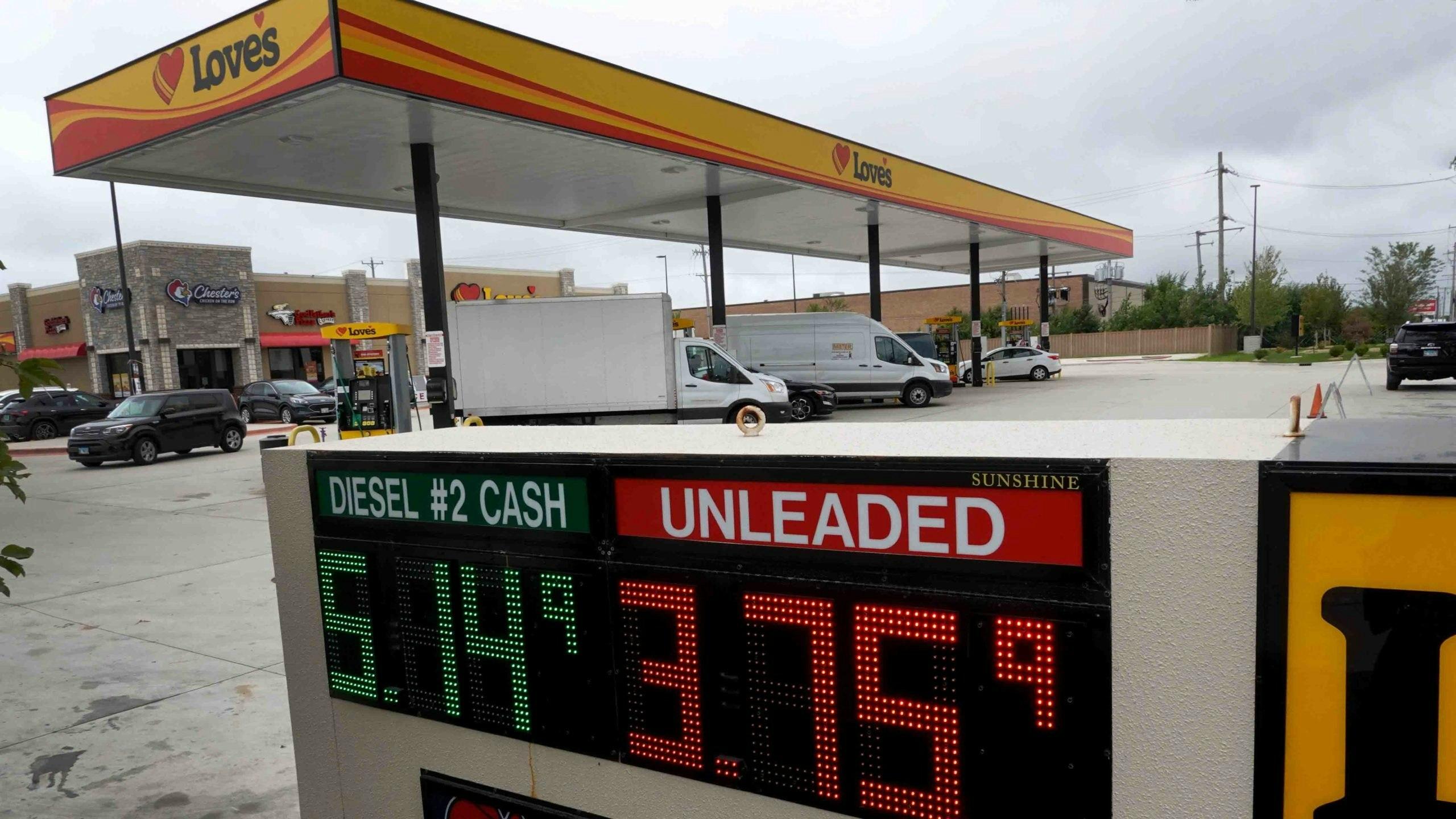
Diesel at $6.29 a Gallon: Why Life in America Could Get More Expensive — and What Families Can Do About It
Rising fuel costs don't just affect drivers. They can put pressure on grocery prices, deliveries, and everyday purchases across the country.
World
TRUMP'S $5,000 ELECTION PROMISE SPARKS CONTROVERSY: A POLITICAL PAYOUT OR A STRATEGY TO KEEP POWER?
The president has tied a proposed $5,000 payment to a Republican victory in November's midterm elections. Critics are questioning the timing, the price tag and what the promise means for American voters.
What readers are saying
Readers discuss the facts, the analysis and how Politics affects everyday life.
Comments 0